Frontpage

Frontpage
Die Wiedergeburt der Kastanie
A
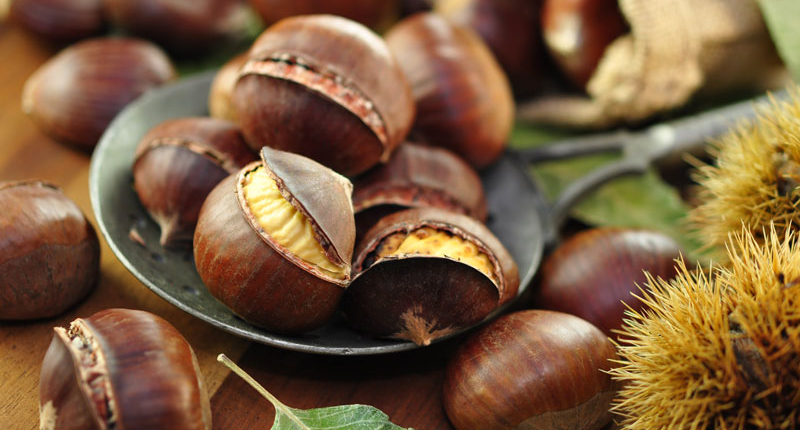
Erst wärmen die unscheinbaren Nüsse die klammen Hände, dann werden die goldenen Früchte mit einem Knacken aus ihrer angekohlten Schale befreit, und schliesslich wandern die kleinen Schätze in den Bauch, in dem sie wohlige Wärme verbreiten.
B
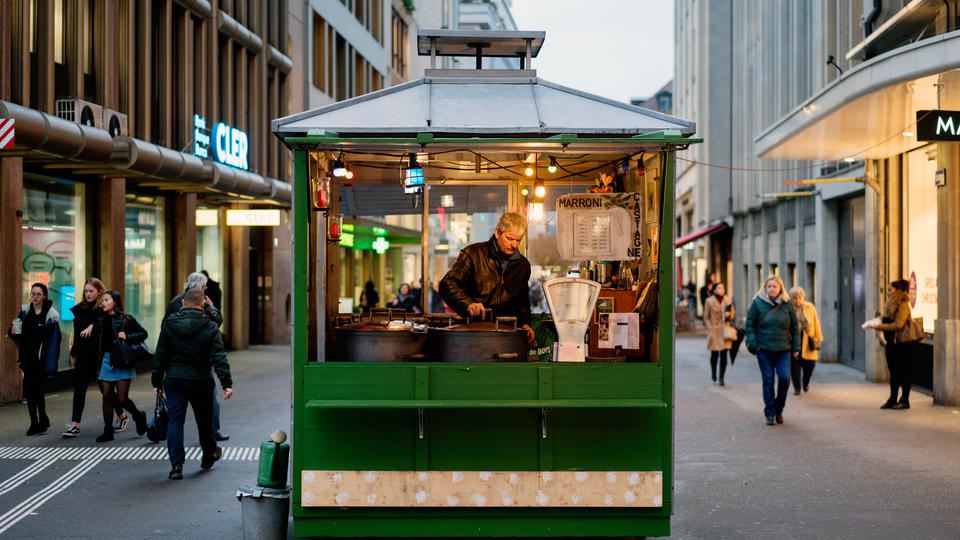
Wenn sich der Sommer zu einem Ende zuneigt, die Temperaturen fallen und die Wälder orange-rot aufflammen, tauchen überall Stände mit dampfenden Kesseln auf, aus denen ein verführerischer Duft durch die Innenstädte zieht.
C
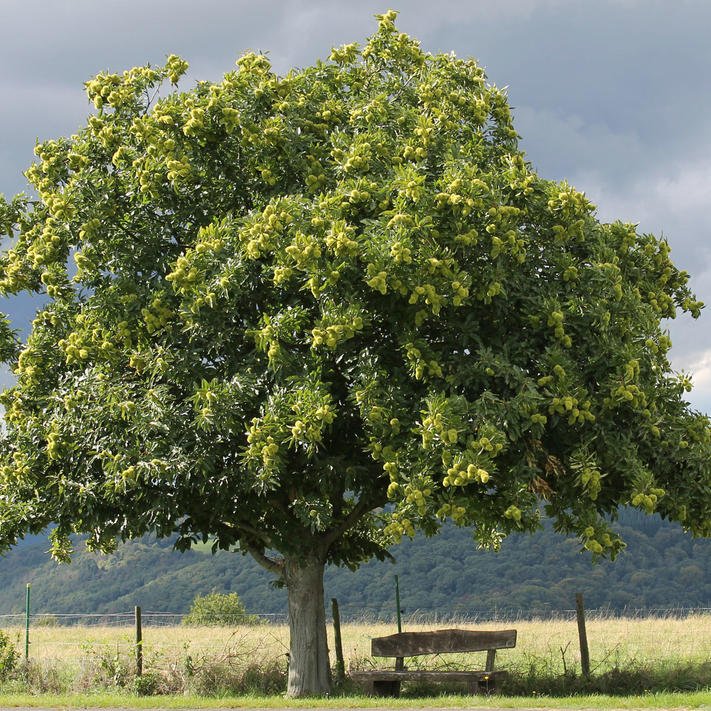
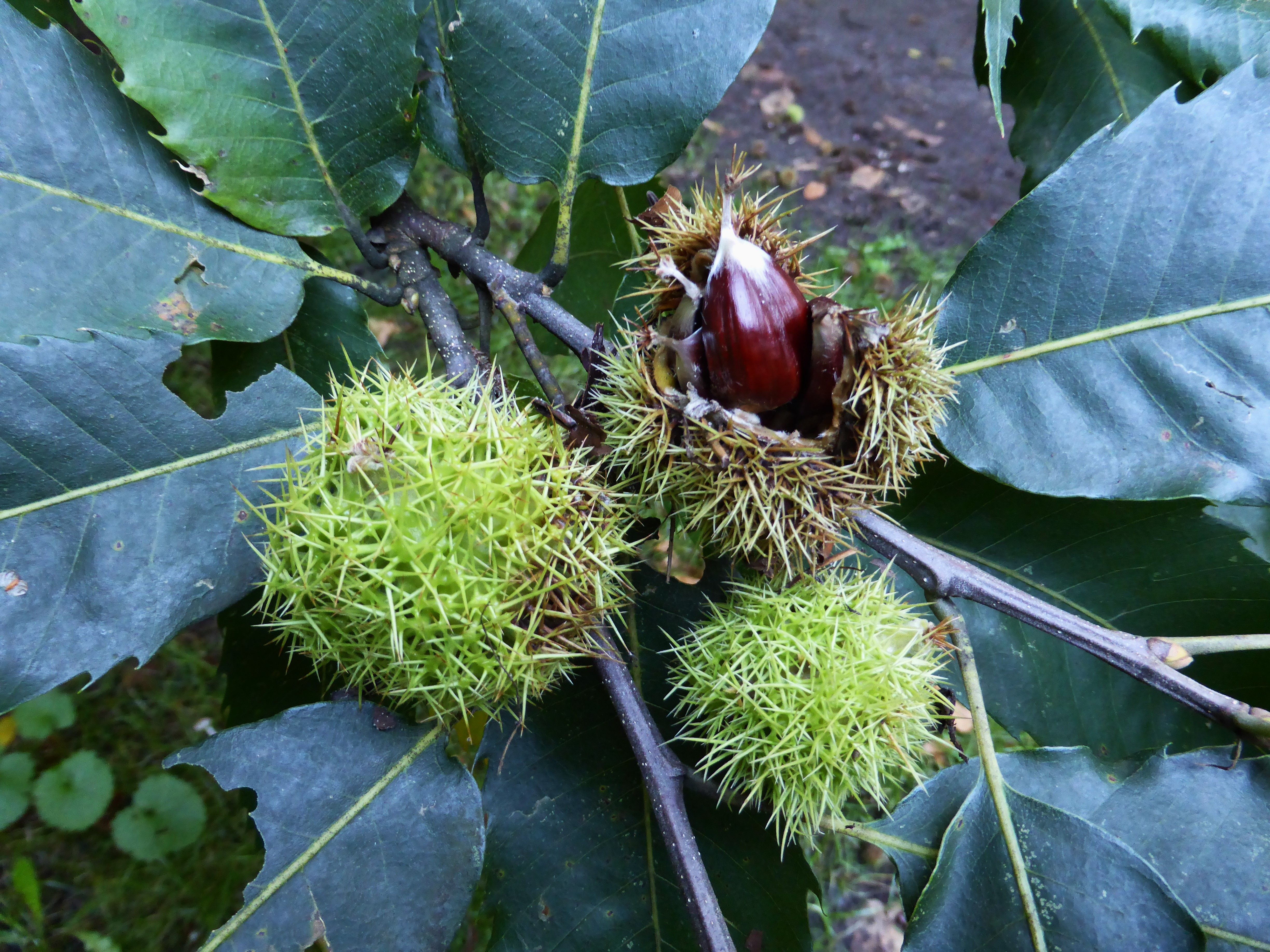
Wenn im Herbst ihre Nüsse reif sind, lassen sie diese einfach zu Boden fallen, so dass sie gesammelt und küchenfertig gemacht werden können.
D
Dort stehen ganze Wälder von den Einheimischen auch Selven genannt – aus mächtigen Kastanienbäumen, die viele Jahrhunderte in ihren knorrigen Stämmen haben.
E
Am Ende der Erntezeit finden dann vielerorts Feste zu Ehren der Kastanie statt. Beispielsweise in Brusio, einer kleinen Ortschaft in der Valposchiavo, wo die nahrhafte Nuss seit Jahren im Oktober an der «Sagra della Castagna» gefeiert wird.
F
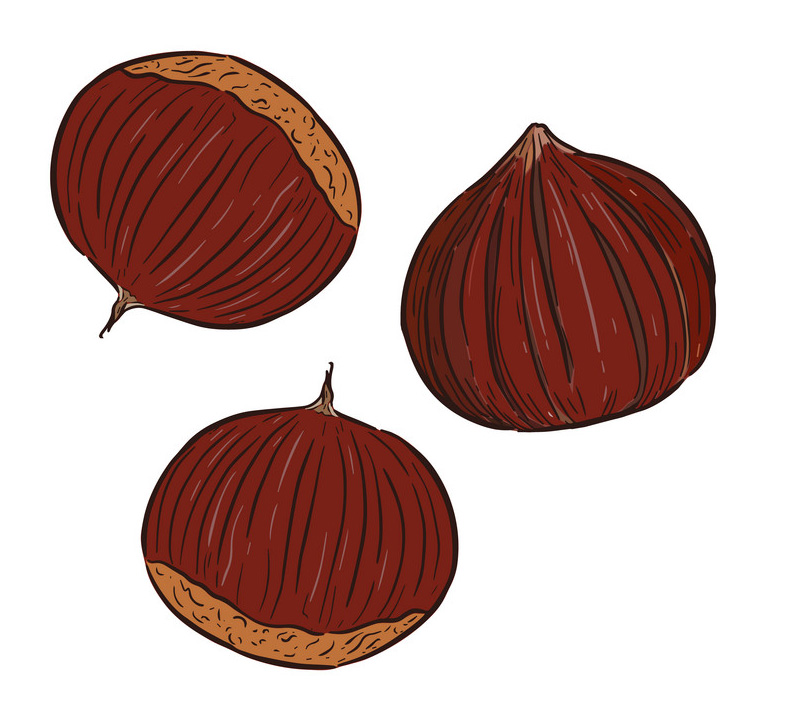
Es sind frisch geröstete Edelkastanien, hierzulande Marroni genannt, die in braunen Papiertüten den Besitzer wechseln und Genuss für alle Sinne versprechen.
G
Der Grossteil dieser Kastanien stammt aus dem Süden der Schweiz: dem Wallis, dem Tessin und den Bündner Südtälern.
Video 1
Video 2
Video 3
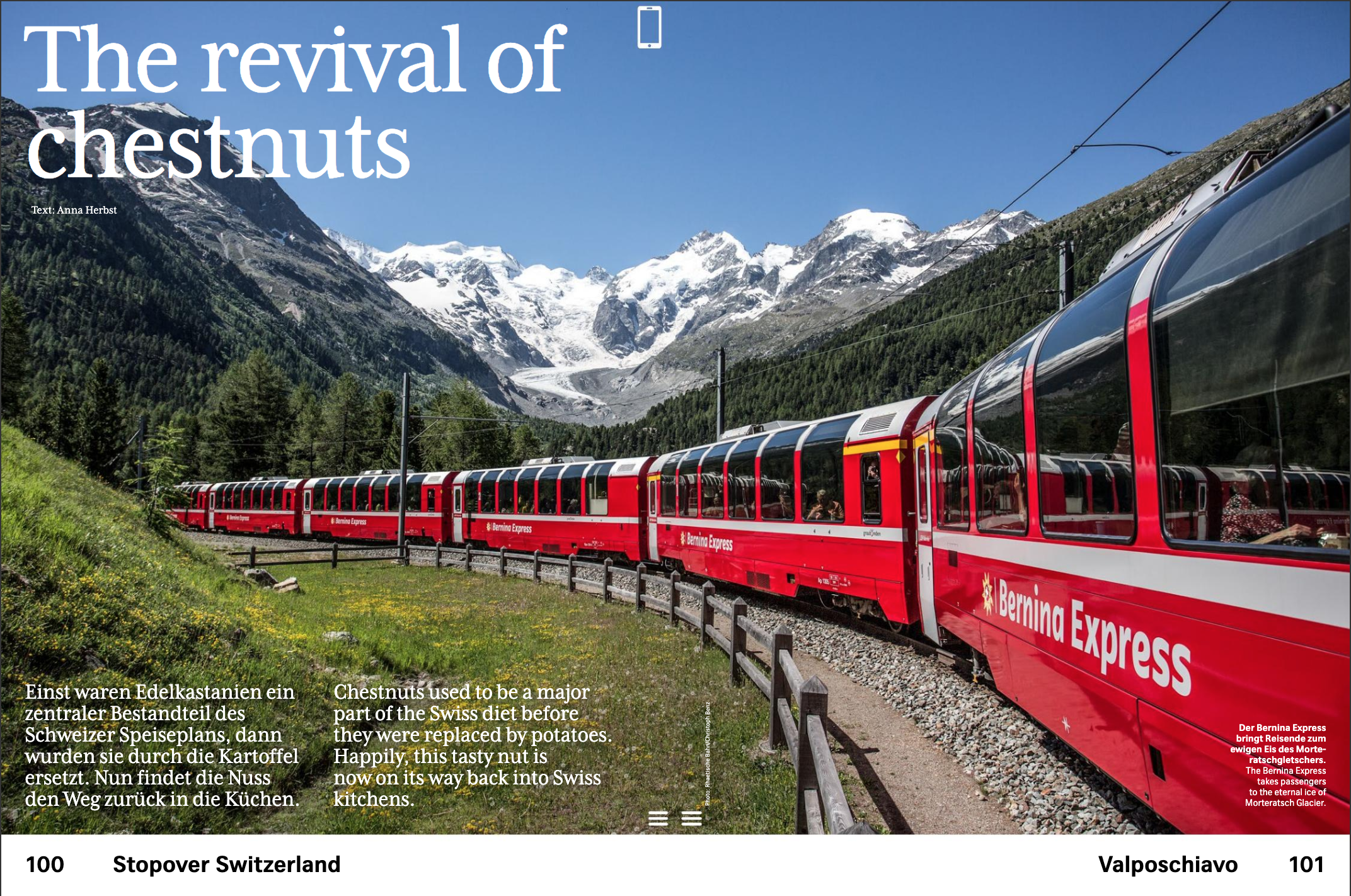
A staple food that grows on trees
A
Growing cereals proved to be extremely difficult on the steep alpine terrain, so the locals were very pleased to find that the nuts – if stored well – pro vided flour for bread and porridge.
B
Chestnuts presumably came to Switzerland with the Romans and were much appreciated for their resistant timber in particular. It was not until the Middle Ages that the nuts were identified as a valuable source of food.
C
But recent years have seen something of a chestnut revival thanks to a renewed interest in local gastronomic roots.
D
The chestnut forests are cherished again and marroni are on their way back into the kitchen, where they are used to make a wide variety of elegant dishes.
E
But the chest nuts gradually disappeared from the table and lost their economic importance in the 19th cen tury after potatoes made their triumphal advance through Europe.
F
The marroni became a staple of rural diets on the southern slopes of the Alps from then onward, and for next 700 years.
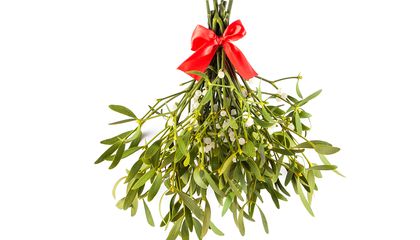
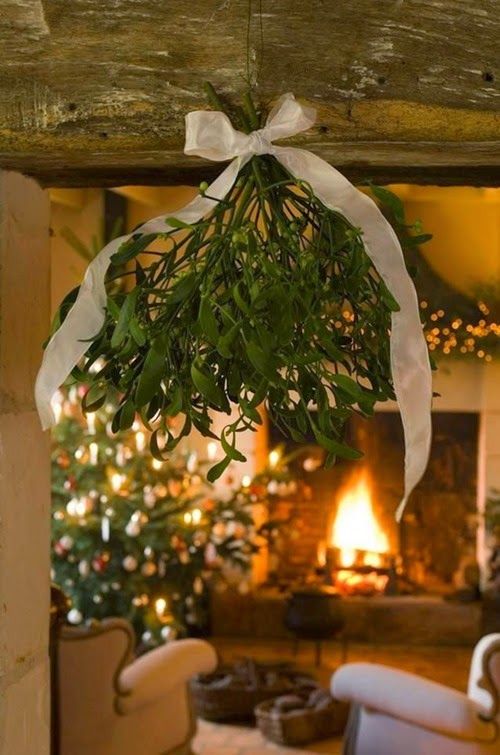
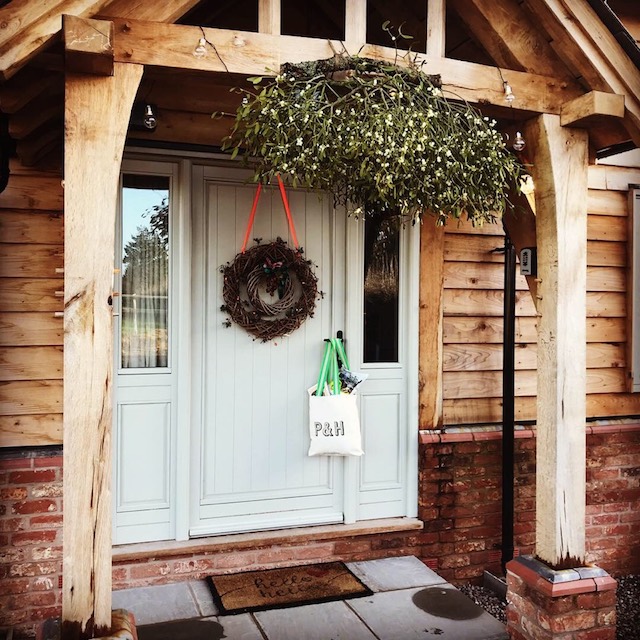
Mistletoe is a plant that grows on different trees. The tradition of hanging it in the house goes back to the times of the vikings. They believed that it had mystical powers which bring good luck to the household and sends off evil spirits. It was also used as a sign of love and friendship in. That’s where the tradition of kissing under mistletoe comes from: If a woman and a man stand under the same mistletoe in the same moment… They have to kiss!


a scale
Roasting pot
Menu board
A

B
C
D
E

F

A
B
A
B
C
D
E
F
G – Picture 1

G – Picture 2
H
I
J – Picture 1
J – Picture 2
K – Picture 1
K – Picture 2
L
M
N
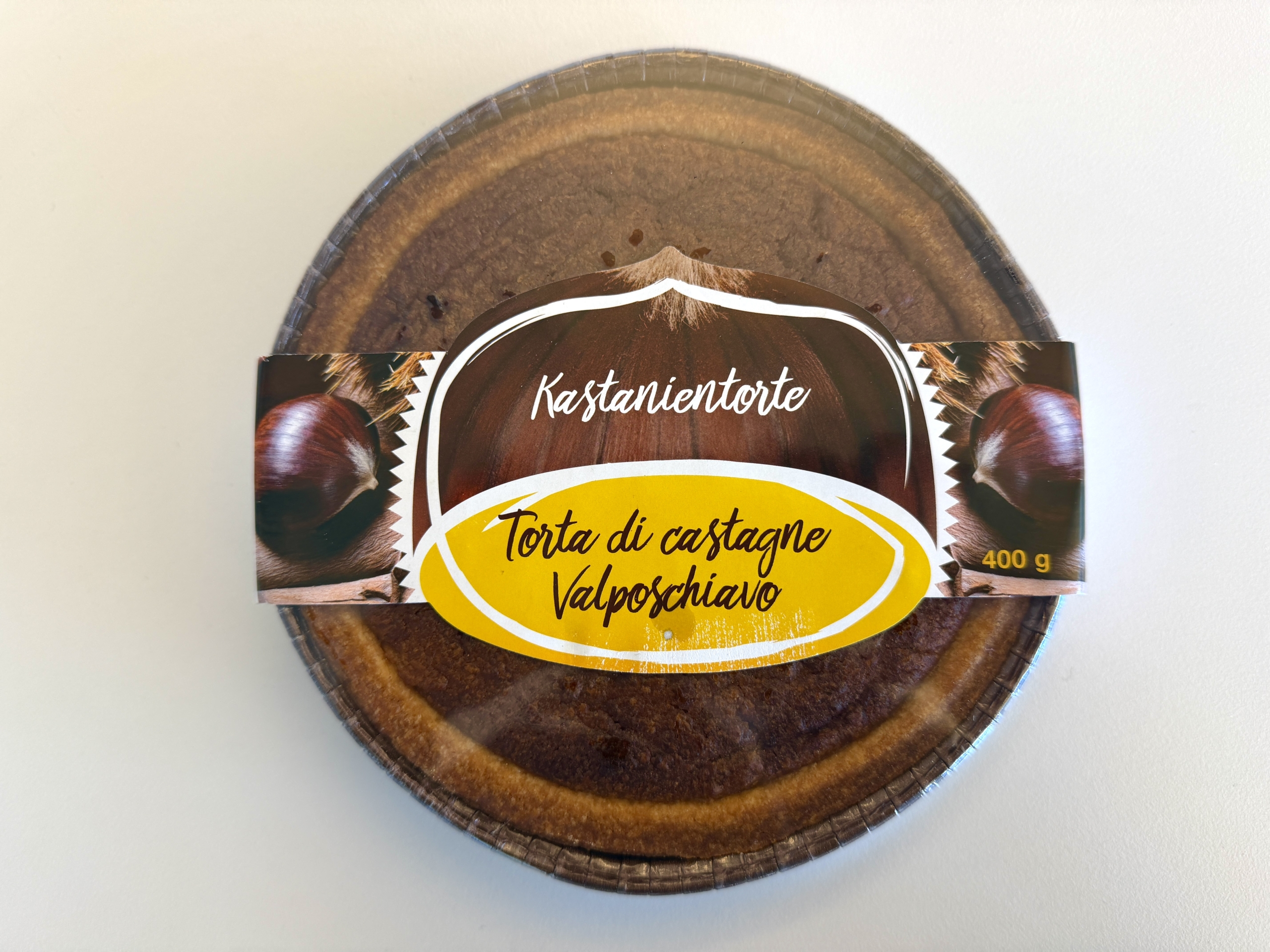
A village celebrates
The “Sagra della Castagna” festival in Brusio is devoted to the chestnut, once so vital in this region. The chefs at many local restaurants look through old cookbooks for recipes. They transform the chestnut into mouth-watering multi-course menus.
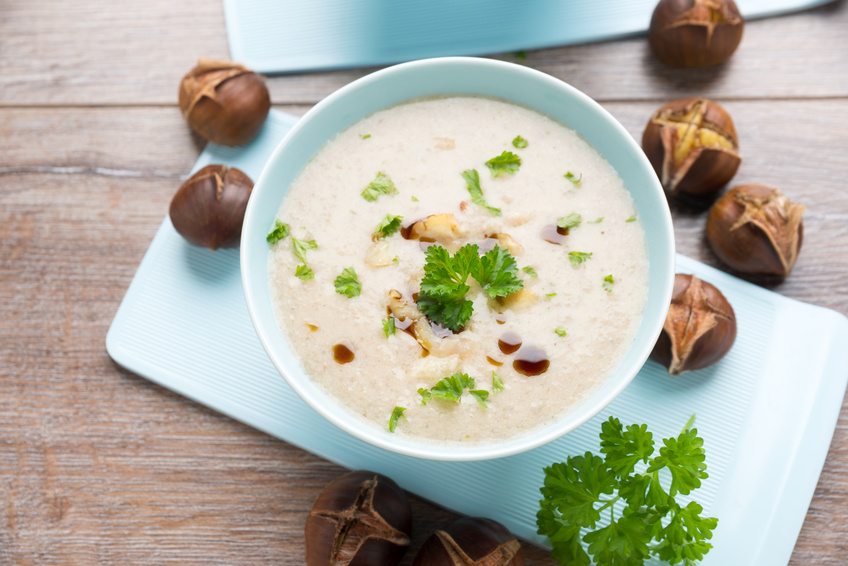
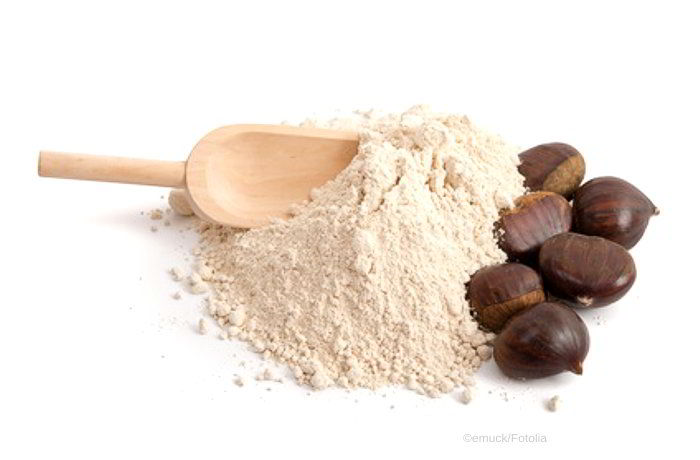
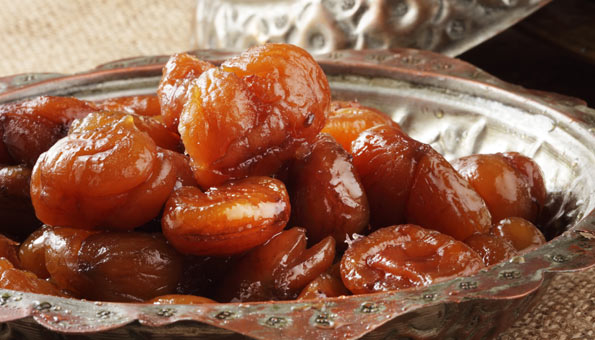
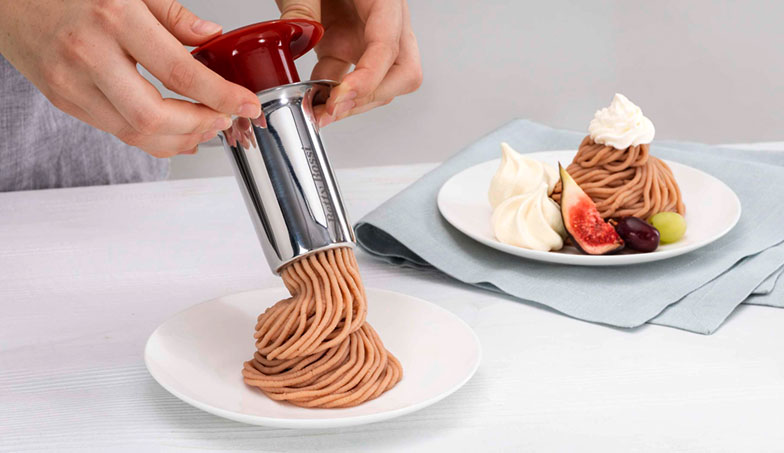
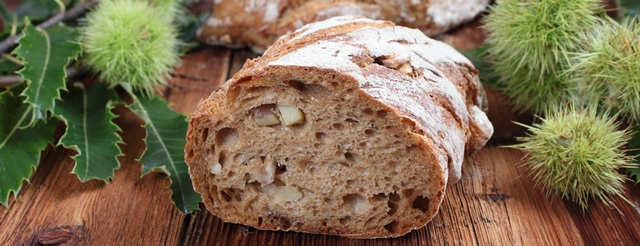
The chestnut is blended to make soup, mixed into purée, baked into bread, caramelised into delicious side dishes to accompany meat, used as flour for cakes and turned into sweet puddings until no one can eat another spoonful.
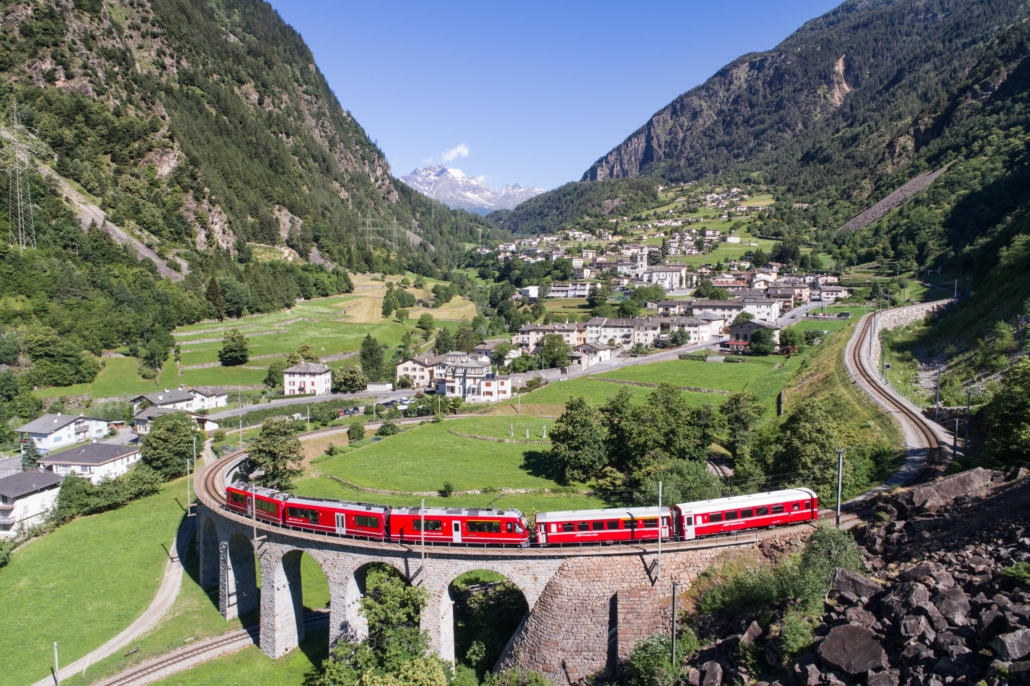
The chestnut festival takes hold of the entire village, not just the restaurants! There are guided tours through the golden chestnut forests, the market vendors sell chestnut specialities to eat, but also to keep, and you can smell the irresistible fragrance of nuts roasted over open fires far out into the valley. The celebrations take place against the stunning backdrop of the famous circular viaduct on the railway line between Albula and Bernina. The viaduct is a UNESCO World Heritage Site since 2008.
Vocabulary
| to be devoted to | etw. gewidmet sein |
| vital | lebensnotwendig |
| chef | (Chef-) Koch |
| mouth-watering | köstlich |
| multi-course | mehrgängig |
| to blend | verschlagen /-mischen /-mengen |
| side dish | Beilage (in einem Gericht) |
| to accompany | begleiten |
| flour | Mehl |
| take hold of sth. | etwas ergreifen |
| guided | geführt |
| vendors | Verkäufer |
| irresistible | unwiederstehlich |
| fragrance | der Duft |
| valley | das Tal |
| stunning | umwerfend / atemberaubend |
| backdrop | Hintergrund / Kulisse |
A
B
C
D